Overtone
Kelin Eator Font __top__ -
As of 2025, the Kelin Eator font is gaining traction via TikTok "aesthetic font" trends. Designers are currently creating variable versions of the font (allowing you to adjust the "bounciness" slider). If the trend continues, expect to see Kelin Eator pre-installed on design tablets or integrated into AI design tools like Midjourney text renderers.
The font features "soft rounding" on the ends of strokes (known as terminals). There are no sharp, jagged edges. This softness makes the font incredibly approachable and friendly, ideal for children’s books or cozy lifestyle blogs. kelin eator font
How does Kelin Eator compare to other popular "cute" fonts? Let's look: As of 2025, the Kelin Eator font is
Some free versions of Kelin Eator may only include basic Latin characters (A-Z, 0-9). If you need accented characters (é, ü, ñ) for languages like French, Spanish, or German, you might need to purchase the "Pro" version. The font features "soft rounding" on the ends
Whether you are a graphic designer working on a retro poster, a content creator crafting eye-catching thumbnails, or a casual user looking to spice up your digital diary, the Kelin Eator font offers a unique flavor that stands out. This article dives deep into the origins, characteristics, usage tips, and legal considerations of the Kelin Eator font.
: Often seen on invitation cards, product packaging, and posters. Licensing and Availability
Examples
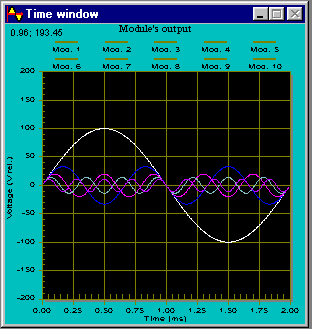
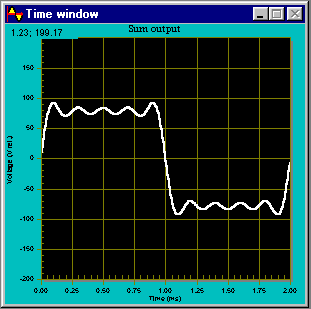
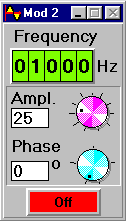
You can test the Helmholtz assumption that the relative phases of the overtones are irrelevant to hearing.
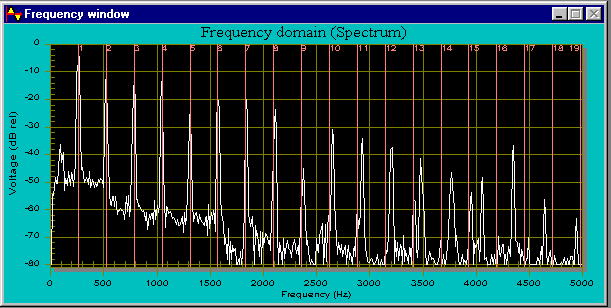
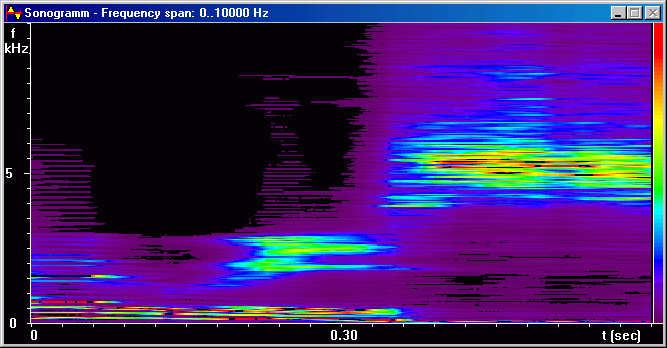
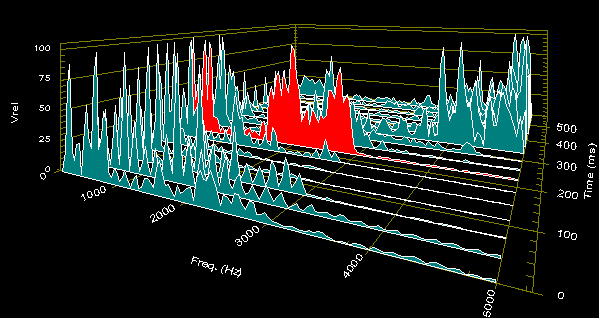
In analyser experiments you capture sound from the sound card or from a WAV file up to several seconds long, select the starting time of the time slice and analyse time and frequency responses. The example shows the spectrum of a piano playing a middle C (262 Hz). The non-harmonic overtones are clearly seen. (Due to the stiffness of the string, the frequencies of the partials are too high.)
Download version 1.15, June 2009: OVERTONE.ZIP
(1.55 MB)
Unpack in a new folder, read README.TXT and start OVERTONE.EXE
(Some firewalls or User Access Control (UAC) may block execution. Give OVERTONE the necessary permissions.
Make sure, that the sound device is not used by another application.)
For more information, send e-mail to address given in README.TXT
Unterrichtseinheit Analyse von Klangspektren von Alain Hauser (in German)
